|
Case studies include information about actual recoveries
completed within our lab. You may find similar symptoms to a problem
you are having with your drive. Here are a couple of recent cases:
• 250GB
Seagate Clicking
• 1TB Raid
0
|


|
|
**No Evaluation Fees / No Attempt Fees** Free evaluation and free external hard drive with every successfull recovery. You pay nothing unless your data is recoverable. Call now for a free quote: 1-800-717-8974. |
RAID Data Recovery - How It Works
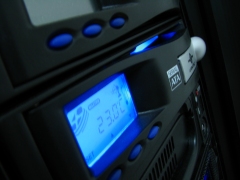 RAID
data recovery is probably one of the most complex processes any data
recovery firm can perform. More often than not, the problems are compounded
by the actions of the client prior to sending the drives in for recovery.
Many users feel that it is important to try and recover the data themselves
or repair the array through various system utilities, and this may be
fine if the data is not critical. However, it has been our experience
that when you have a RAID failure that has resulted in substantial data
loss, more often than not, somebody's job is on the line if that data
is not recovered. The biggest piece of advise this article can provide
in the event of a RAID failure: LEAVE IT ALONE! RAID
data recovery is probably one of the most complex processes any data
recovery firm can perform. More often than not, the problems are compounded
by the actions of the client prior to sending the drives in for recovery.
Many users feel that it is important to try and recover the data themselves
or repair the array through various system utilities, and this may be
fine if the data is not critical. However, it has been our experience
that when you have a RAID failure that has resulted in substantial data
loss, more often than not, somebody's job is on the line if that data
is not recovered. The biggest piece of advise this article can provide
in the event of a RAID failure: LEAVE IT ALONE!
IT professionals have a lot of pressure placed on them when a catastrophic
system failure occurs. It is their job to make sure that all systems are
up and running. Many times, out of panic, troubleshooting processes are
initiated in order to correct the problem. Often times these processes
only make a bad situation even worse, and in many instances they can render
the data unrecoverable. Let's keep in mind what this data can consist
of in an average corporate environment. You are probably dealing with
information that cost many hundreds of thousands, possibly millions of
dollars in labor and resources to create. Much of the data probably can't
be duplicated. The intellectual value alone could be in the many millions
of dollars. Corporate executives really don't care to hear about how the
failure occurred, or what unbelievable string of events led up to the
server crashing. They don't care to hear the technical jargon as you try
to explain to them what happened, and hope they understand that it wasn't
your fault. They only want to know one thing..."why was this data not
backed up, and how can we get it back?"
Instead of taking chances on your own, call a data recovery professional.
RAID data recovery can be expensive, but in most cases it is much less
costly than trying to recreate the data that has been lost, and getting
the data back may save someone's job. There is a set procedure that most
data recovery professionals follow when it comes to performing any recovery
work. These procedures are followed and expanded upon when dealing with
a RAID recovery. The first step of any RAID recovery is to make sure all
of the drives are functional. In order to properly complete the recovery
it is essential that all drives are fully functional (this is especially
true with a RAID 0). This may involve taking any physically damaged drives
into the clean room, in order to make the necessary repairs so that they
function normally again. Once that is completed the next step is to make
complete sector-by-sector clones of every drive. This is not "Ghosting",
but a very low-level process that allows the recovery technician to work
around bad sectors, and have complete control over how the drive functions.
During the cloning process, the original source drive that you sent in,
is put in a "write protect" mode so that no data can be written to that
drive. This insures that the original source data is not altered in any
way.
Once the cloning process is complete, the original drives you sent in
are set off to the side and are no longer touched. The actual recovery
process is performed on the cloned copies, so nothing that is done during
recovery can make the situation worse. After the drives are cloned, they
will be loaded into a system and destriped. Destriping is like taking
the scattered pieces of a puzzle and putting them together neatly. Simply
stated, destriping is taking the data scattered among the multiple drives
that make up array and placing it onto a single destination drive. From
there we have a single drive in which we can complete what we would consider
to be a "normal" recovery. We can complete this process even at the multi-terrabyte
level. If the damage to the stripe is not too severe, in most cases a
complete rebuild of the directory structure and all associated data can
be completed.
As mentioned earlier, RAID data recovery can be expensive. Typically
a RAID recovery can be priced around $500 per drive and up. A number of
factors influence the cost, such as RAID type, file system, total size,
situation of failure, etc. ACS Data Recovery is one of the few companies
that do not charge an evaluation fee on complex RAID systems. Even though
the initial price tag of a RAID recovery may be shocking, many times the
costs involved in recovering the data are not even 1% of the data's overall
value. So if you are reading this article and you haven't suffered a RAID
failure, what are you waiting for? Back up your data NOW.
|
**No Evaluation Fees / No Attempt Fees** Call now for a free quote: 1-800-717-8974. For over a decade we have been dedicated to recovering data for clients across the globe.
|
|
|
Get setup as a reseller and get 10% off of all our
recovery services. 10% may not seem like a lot, but when you factor
in that we are already one of the lowest priced data recovery providers,
it can mean you have room for a substantial mark up.
|
|
ACS Data Recovery
1005 Marlandwood Rd. Suite 117
Temple, TX 76502
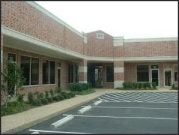
Get Detailed Driving Directions
Toll-Free: 1-800-717-8974
International: +1-254-774-8282
Fax: 1-800-717-8974
Email: info@acsdata.com
|
|