|
Case studies include information about actual recoveries
completed within our lab. You may find similar symptoms to a problem
you are having with your drive. Here are a couple of recent cases:
• 250GB
Seagate Clicking
• 1TB Raid
0
|


|
|
**No Evaluation Fees / No Attempt Fees** Free evaluation and free external hard drive with every successfull recovery. You pay nothing unless your data is recoverable. Call now for a free quote: 1-800-717-8974. |
Data Recovery Tips
If you've lost your data, the first few steps you take can make a big
difference in whether your data can be salvaged or not. Failing to be
cautious at this critical time can render your data unrecoverable even
by the most experienced technicians.
To prevent further data loss, it's important to follow these steps:
- If your drive is clicking or grinding, even if it is still being seen
by the system BIOS, you should shut the power down immediately. This
is a good indicator that your drive has failed or is on the verge of
imminent failure. Clicking hard drives, often referred to as the "Click
of Death" are a sign that you have a serious problem, most
likely a head
crash, and you are going to need a data recovery professional to
help get your data back.
- Just to reiterate, DO NOT repower a drive that is clicking,
or you feel may have suffered a physical
failure. Doing so will only reduce the chances of a successful recovery.
I know it was stated in the step above, but it is worth repeating.
- Never remove the cover, logic board, or any case cover screws from
your hard drive.
- Avoid trying to recover the data yourself with common off the shelf
data recovery utilities. Many of these programs can actually cause further
data loss, because they write to the failed hard drive. Doing so may
actually overwrite recoverable data, resulting in permanent loss of
that data.
- Do not attempt to run CHKDSK or scan disk on a drive that seems
to be failing.
- Be cautious when choosing a data recovery company. There are many
choices out there, but there are few companies who can even properly
diagnose a failed drive, much less recover the data from it. Don't be
fooled by misleading success rates or low prices. Our report "Choosing
The Best Data Recovery Provider" is a look at what you should
watch out for when shopping for a data recovery professional. Do they
have the necessary experience? Do they have their own Class-100 or better
clean room? Do they charge additional fees for parts?
- Package the drive appropriately when shipping it. Think of it as an
egg, and you need to protect it during shipping. A few good layers of
bubble wrap, a well-fitting box, and a reputable shipper like UPS
or FedEx will get
your drive delivered safely to our lab. For more information about submitting
your drive to us for recovery, click HERE.
- If you need your data as soon as possible, be sure to ship it priority
overnight. You can also select to have the data recovery service expedited
for the fastest possible turn around. In some cases, expedited recoveries
are completed the very same day they are received.
- If you are comfortable working with your computer, and familiar with
the components, you can attempt to remove your hard drive yourself.
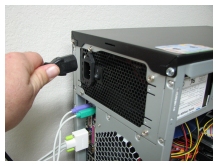
Always unplug your computer first |
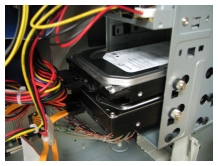
Locate your hard drive |
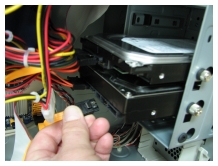
Disconnect the cables and holding screws |
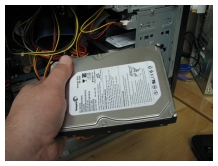
Remove the drive and handle it carefully |
|
**No Evaluation Fees / No Attempt Fees** Call now for a free quote: 1-800-717-8974. For over a decade we have been dedicated to recovering data for clients across the globe.
|
|
|
Get setup as a reseller and get 10% off of all our
recovery services. 10% may not seem like a lot, but when you factor
in that we are already one of the lowest priced data recovery providers,
it can mean you have room for a substantial mark up.
|
|
ACS Data Recovery
1005 Marlandwood Rd. Suite 117
Temple, TX 76502
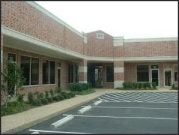
Get Detailed Driving Directions
Toll-Free: 1-800-717-8974
International: +1-254-774-8282
Fax: 1-800-717-8974
Email: info@acsdata.com
|
|